How to Care for a Puppy During the First Few Days at Home
Bringing a puppy home is exciting, emotional, and sometimes a little chaotic. For your puppy, however, everything is completely new: the smells, the sounds, the people, the routine, and even the place where they sleep. The first few days are very important because they help your puppy feel safe, understand the new environment, and begin building trust with the family.
The most important thing during this period is to create a calm, predictable routine. Avoid overwhelming your puppy with too many visitors, loud noises, or constant handling. Give them time to explore the house slowly and always supervise them, especially around stairs, electrical cords, small objects, plants, and anything they might chew or swallow.
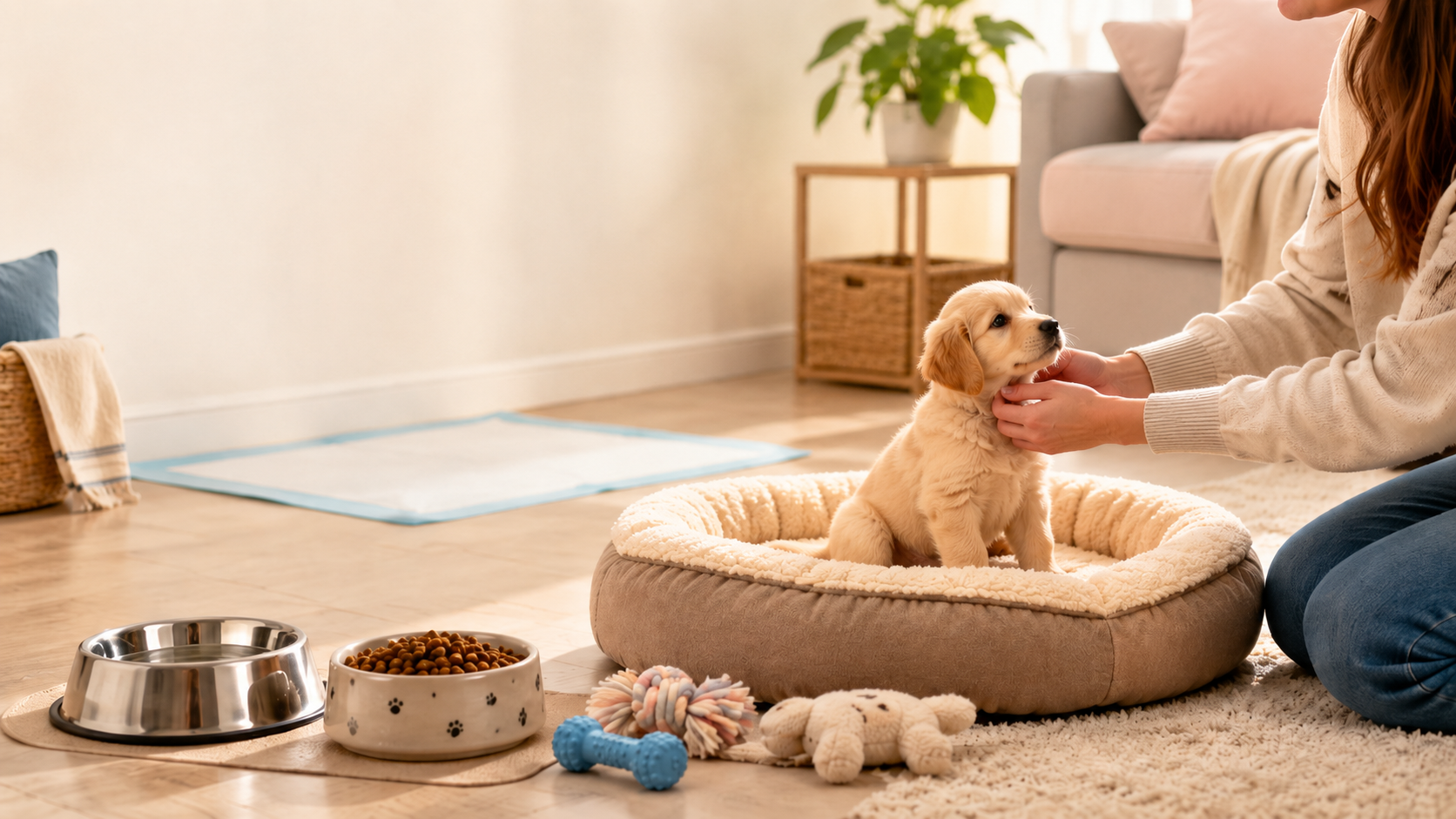
Before your puppy arrives, prepare a safe space just for them. This can be a small room, a crate, or a playpen with a comfortable bed, water, toys, and puppy pads if needed. This area should feel like a quiet refuge, not a place of punishment. Puppies need a lot of sleep, and having a dedicated space helps them rest without being disturbed.
Feeding should follow a consistent schedule. At first, it is usually best to continue offering the same food the puppy was eating before coming home, because sudden diet changes can cause digestive problems. If you want to change the food later, do it gradually over several days. Always provide fresh water and avoid giving human food, especially foods that may be unsafe for dogs, such as chocolate, onions, grapes, raisins, alcohol, and anything highly seasoned.
Potty training should begin immediately, but with patience. Take your puppy to the chosen bathroom area after waking up, after eating, after playing, and before bedtime. Praise them calmly when they get it right. Accidents will happen, and punishment can make the puppy anxious or confused. Clean the area properly and keep reinforcing the correct behavior.
The first nights may be difficult. Your puppy may cry because they miss their mother, littermates, or previous environment. Keep their sleeping area close enough that they feel secure, but avoid creating habits you do not want to maintain later. A soft blanket, a safe chew toy, and a calm voice can help. The goal is to comfort the puppy without turning bedtime into playtime.
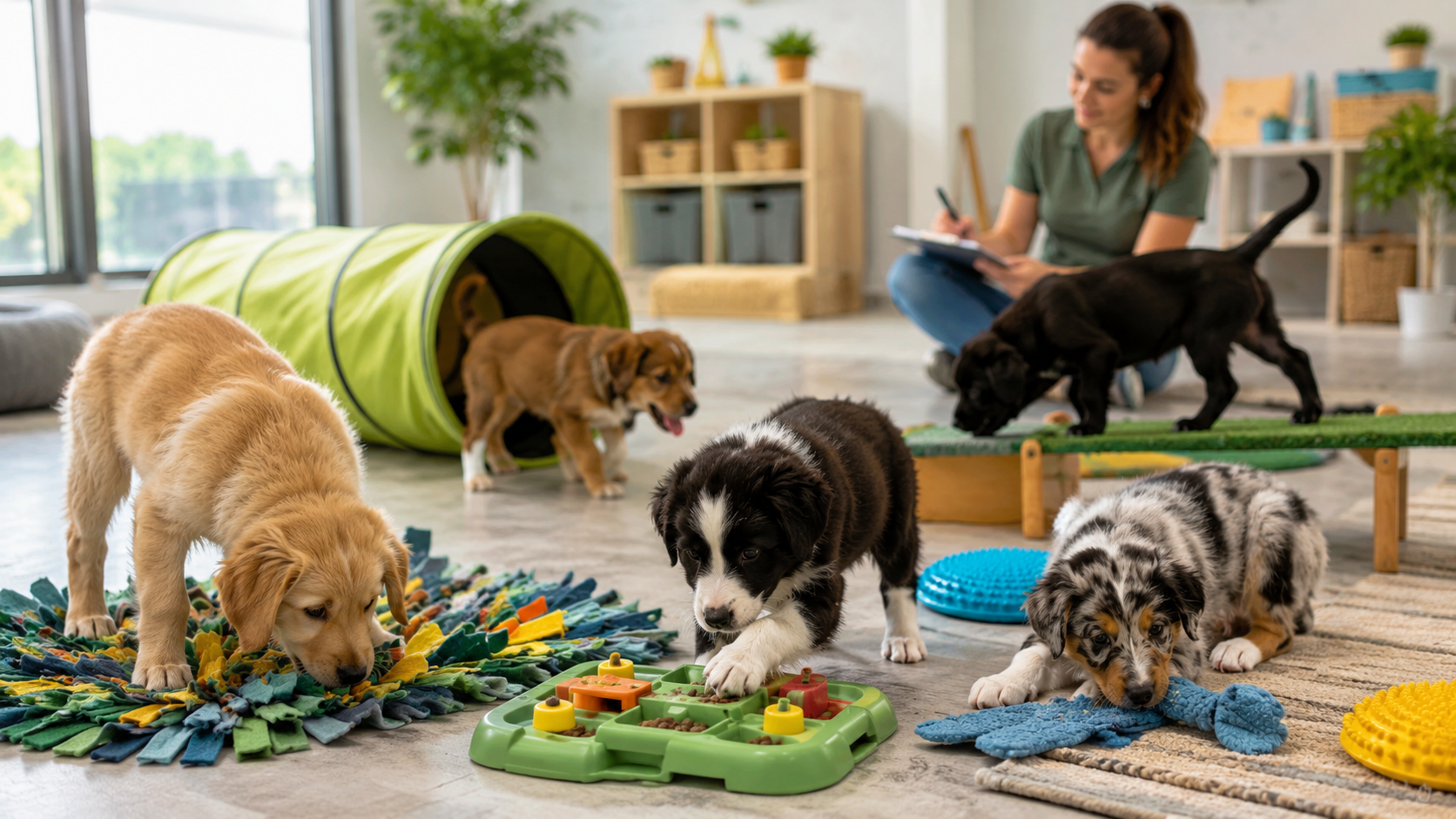
Socialization should start gently. In the first few days, focus on positive experiences inside the home: different sounds, gentle handling, family members, safe toys, and short training sessions. Avoid taking your puppy to public places where unknown dogs may have been until your veterinarian confirms that their vaccination schedule allows it.
Basic training can begin right away, but keep it simple. Teach your puppy their name, reward them for coming when called, and introduce simple commands like “sit.” Use short sessions, positive reinforcement, and treats or praise. Puppies learn best when training feels like a game.
A veterinary visit should be scheduled soon after your puppy arrives. The vet will check your puppy’s general health, confirm vaccination and deworming needs, discuss parasite prevention, and answer questions about feeding, growth, and care. This first appointment is essential to make sure your puppy starts life in the new home safely.
Above all, remember that your puppy is learning everything from the beginning. Be patient, consistent, and gentle. The first few days are not about perfection; they are about creating trust. With a safe environment, a clear routine, proper feeding, early training, and lots of calm affection, your puppy will begin to feel at home and build a strong bond with you.